
Hermina needed a rebuild. Not a redesign of the interface, but a re-architecture of how the app connected to everything around it.
Challenge
The brief was technically demanding. Rebuild the patient app to handle the full journey, not just the booking. Preserve the existing user base through a migration. Integrate with Hermina's internal hospital management system, SIMRS. Add payment. Add medicine delivery. Build it to be owned and operated by Hermina's team once stable.
Each of those requirements pulled in a different direction. The migration alone was a serious technical risk. Over a million existing users were actively booking appointments every day, and any disruption would land directly on patients trying to see a doctor. Their accounts, history, and trust all had to come across cleanly.
Underneath the consumer-facing app sat the harder problem: this wasn't really a consumer app at all. It was a hospital operations system with a consumer interface in front of it. The app needed to talk to SIMRS in real time, sync appointments and doctor schedules across every hospital location, and reflect patient data accurately the moment it changed in any branch. Without that, the rest of the work didn't matter.
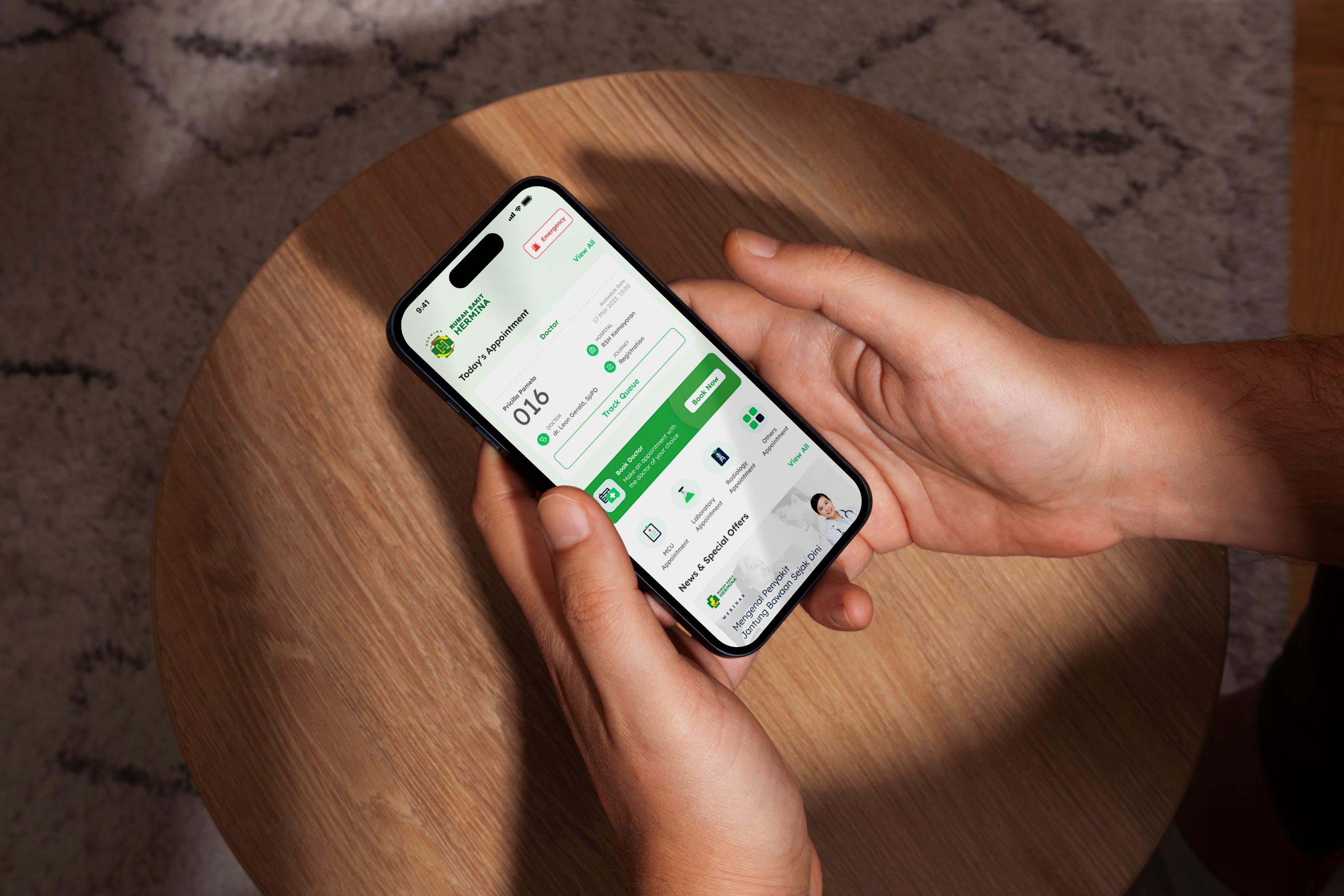
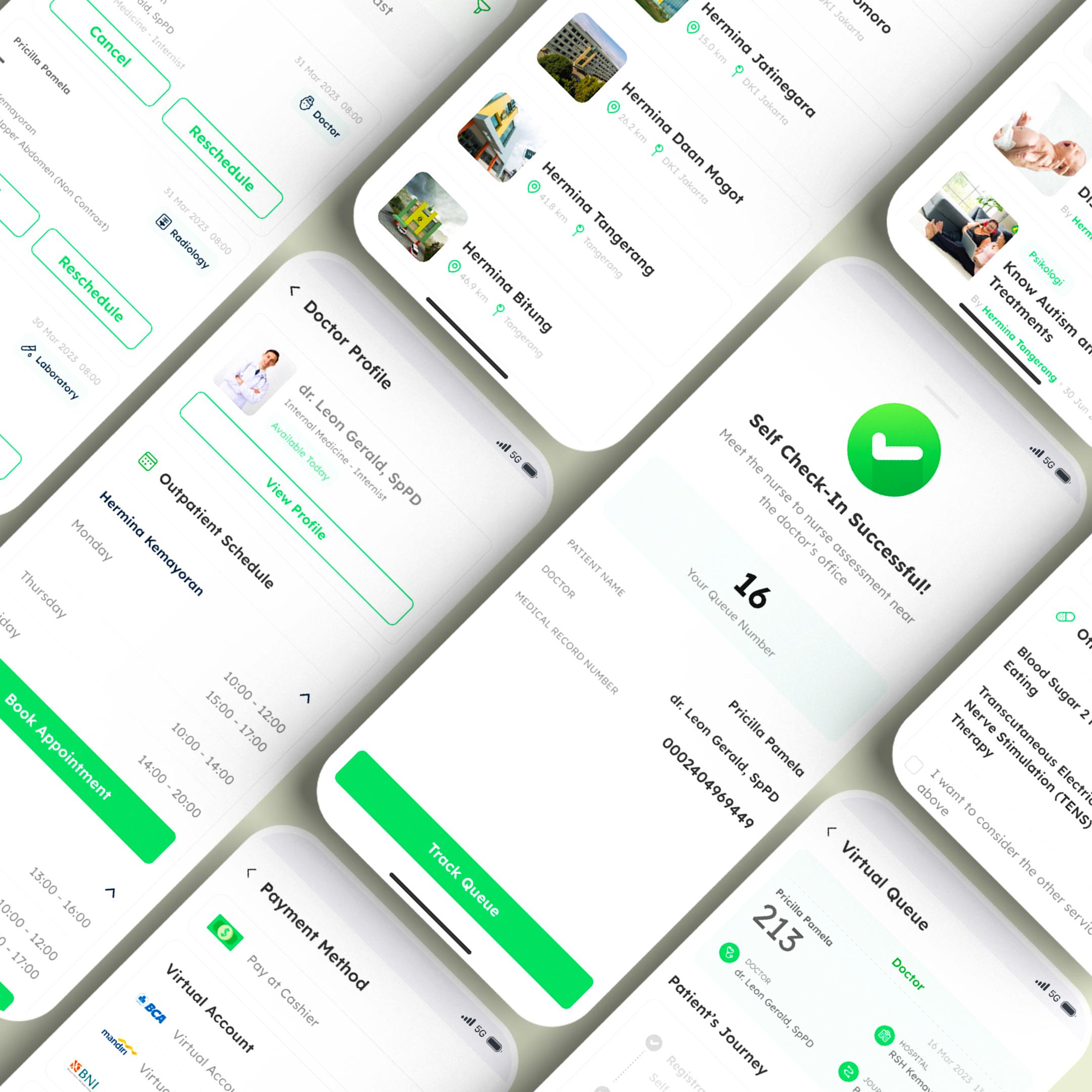
Then there was the journey itself. The old app stopped at booking, which was exactly where the experience used to fall apart. Self check-in, queue visibility, in-app payment, prescription handling, and medicine delivery all needed to live inside one continuous flow. Not as separate features bolted onto a booking tool, but as parts of the same patient experience.
And finally, the platform had to be built to be owned. From day one, Hermina's internal team would inherit it. Code quality, documentation, and architectural decisions all had to assume a clean transfer at the end. We weren't building a system Hermina would depend on us to maintain. We were building one their team could take over and evolve themselves.
What we built
The rebuild moved Hermina from a booking tool to a full patient platform. Everything a patient does, before, during, and after a hospital visit, now lives in one place. None of it works as isolated features. The value came from connecting four separate systems into one continuous patient flow.
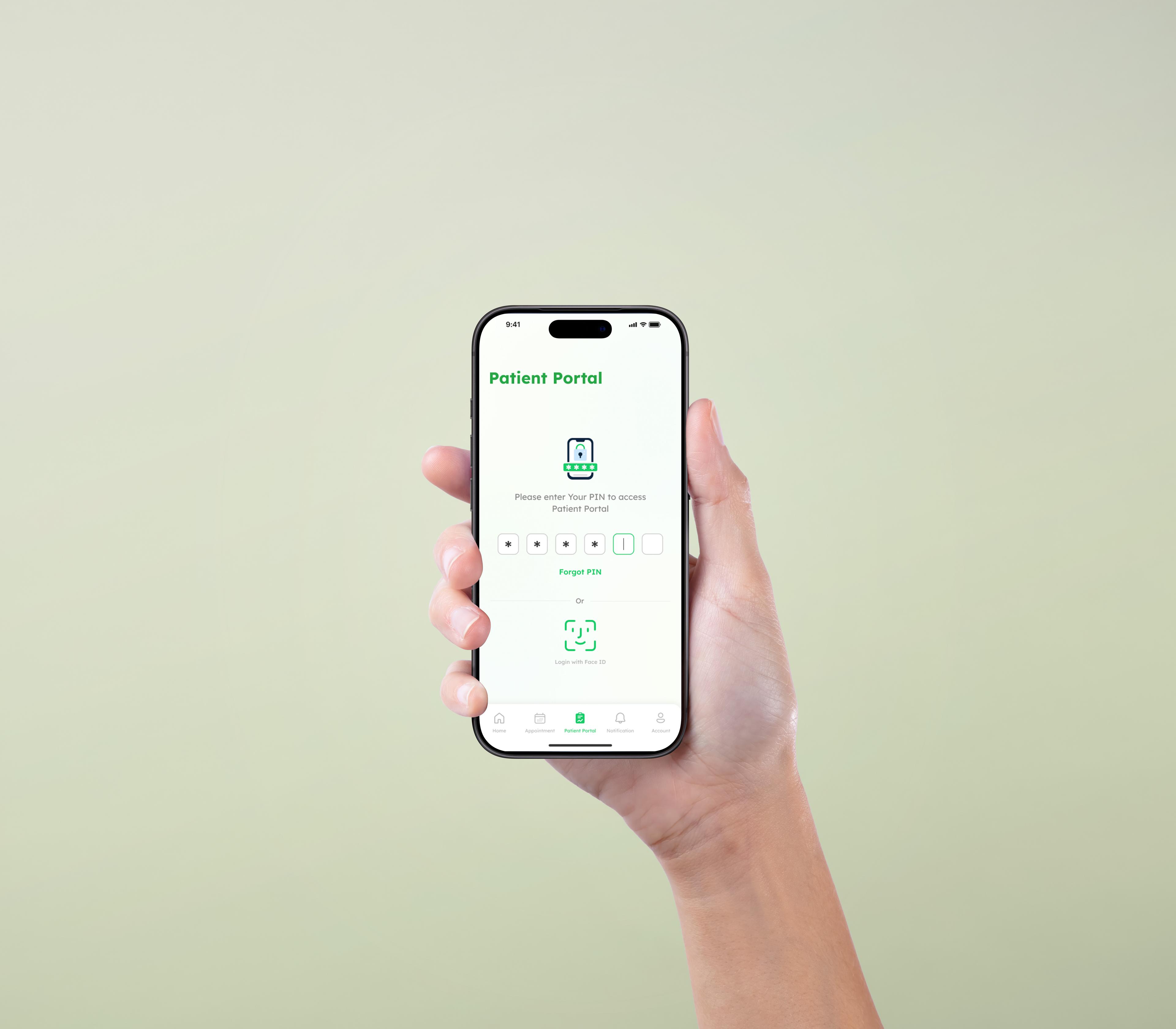
New patient registration with back-office validation. First-time patients can register fully through the app. Registrations flow into a back-office dashboard where Hermina staff validate and approve, replacing what used to require an in-person visit.
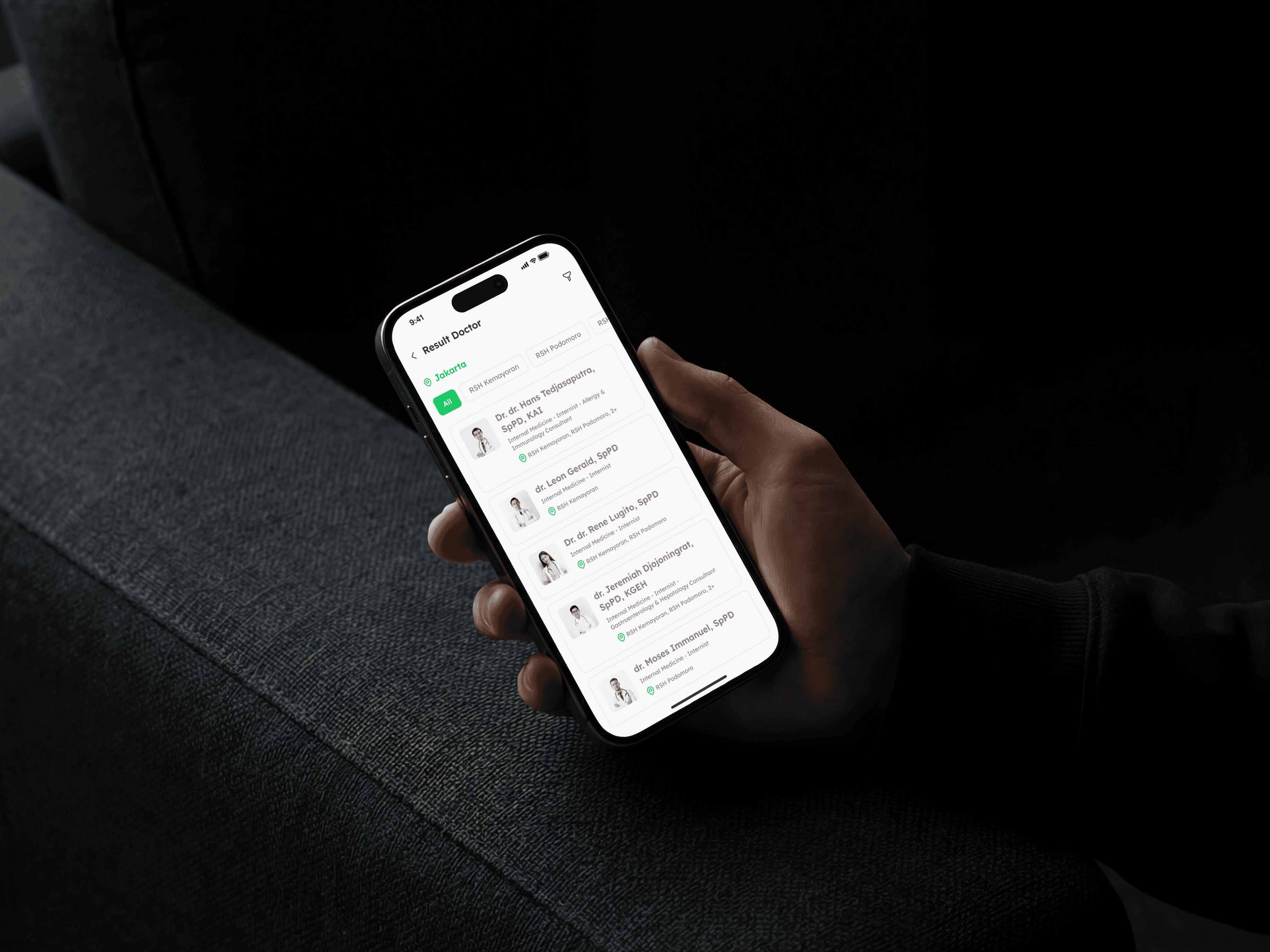
Appointment booking across 45+ hospitals. Real-time doctor availability synced directly from SIMRS, so what the patient sees in the app matches what's actually available at the hospital.
Self check-in on arrival. Patients check in through the app when they arrive, removing counter queue friction entirely.
Live queue tracking. Patients see their position in the queue in real time, so they know when to be at the consultation room rather than sitting in a waiting area for hours.
In-app payment. Payment for consultations and services happens inside the app through an integrated payment gateway. No counter visit required.
Medicine delivery. After consultation, patients can choose to have prescriptions delivered to their home through an integrated delivery partner, rather than waiting at the hospital pharmacy.
The integrations are what made it work. SIMRS handles appointments, schedules, and medical data synced across every hospital location. The payment gateway handles in-app transactions across the full service catalog. The delivery partner handles optional medicine delivery after consultation. The Hermina website handles unified health articles and content inside the app. Each integration carries its own complexity, but the patient only ever sees one experience. Behind it sits a companion back-office dashboard for Hermina's admin team, handling new patient validation, content management, and operational oversight, closing the loop between the patient-facing app and the hospital's internal workflow.
Outcome
Rating: 2.4 → 4.5 stars during our engagement. Hermina's app went from a persistent complaint on the Play Store to one of the better-rated healthcare apps in the Indonesian market, all within our engagement window.
Rolled out across 45+ hospitals nationwide. The platform was launched across Hermina's full hospital network before transfer.
1M+ user base migrated successfully. Existing users were brought onto the new platform without losing account data or continuity.
Handed over to Hermina's internal team as scoped from day one. At the end of our engagement, the platform was transferred in full: codebase, documentation, operational knowledge, and team handover. Hermina now runs and evolves the platform in-house. Exactly as planned from day one.